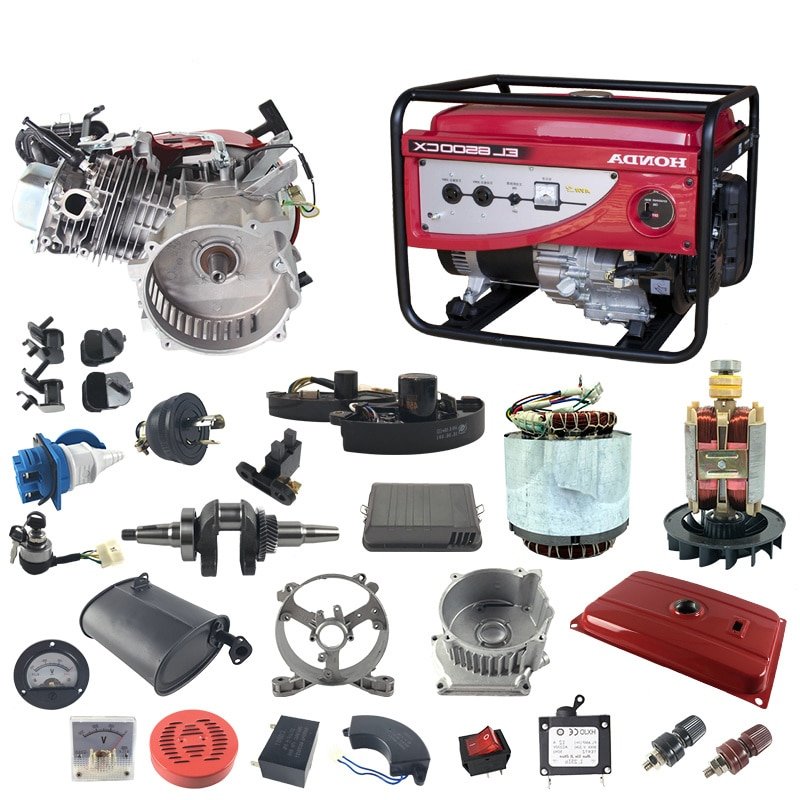
When the lights go out, your portable generator isn't just a machine; it's your lifeline to comfort and normalcy. But its true potential for resilient Generator Accessories and Power Alternatives for home use often lies in the thoughtful addition of accessories. Far from mere add-ons, the right accessories transform your generator from a simple power source into a robust, reliable, and safe backup system. Understanding which ones you truly need, why they matter, and how to use them safely is paramount to protecting your home, your family, and your investment.
This comprehensive guide will walk you through the world of generator accessories, highlighting essential upgrades for mobility, connectivity, maintenance, and safe operation. We’ll also cut through the noise, distinguishing between vital enhancements and risky modifications, ensuring you’re equipped with trustworthy information to make informed decisions for your home's power security.
At a Glance: Essential Takeaways for Generator Accessories
- Prioritize Official Accessories: Always choose manufacturer-supplied or recommended accessories for best compatibility, safety, and to preserve your warranty.
- Safety First: Accessories like transfer switches and proper extension cords are crucial for preventing hazards like backfeeding and carbon monoxide poisoning.
- Enhance Mobility: Wheel kits are a must-have for heavier generators, making them easier to transport.
- Connect Smartly: Adapters and heavy-duty extension cords bridge the gap between your generator and your appliances or home.
- Monitor & Maintain: Meters and maintenance kits help you track usage and keep your generator in top condition, extending its lifespan.
- Weather Protection: Covers are key for protecting your generator from the elements, whether in storage or during operation.
- Beware of Unsanctioned Modifications: Avoid third-party fuel conversion kits, silencers, or exhaust extensions due to safety, warranty, and performance risks.
Why Smart Accessories Matter for Your Backup Power
Think of your portable generator as the heart of your home's alternative power system. Its accessories are the arteries, veins, and control mechanisms that ensure that power gets where it needs to go, safely and efficiently. While your generator itself provides the fundamental power alternative to the grid, accessories unlock its full potential, making it more convenient, safer, and ultimately, more reliable when you need it most.
A crucial point to remember: when selecting any accessory, prioritize those made or explicitly recommended by your generator’s manufacturer. These "first-party" options guarantee the best fit, performance, and compatibility, crucially avoiding warranty issues. Third-party accessories, while sometimes cheaper, can introduce unverified compatibility, safety concerns, and may even void your generator's warranty, especially if they involve hardware modifications. Stick to the experts who built your machine.
Getting Your Generator Where It Needs to Be: Mobility Solutions
Many portable generators, especially those designed for robust output, weigh over 110 pounds. Moving such a heavy piece of equipment can be a significant challenge, but mobility accessories make it surprisingly manageable.
Wheel Kits: Horizontal Hustle Made Easy
A wheel kit typically includes 2 to 4 wheels and a folding handle, transforming a cumbersome box into a rolling cart. They enhance horizontal mobility, allowing you to easily move your generator from storage to its operating location. Many heavier generators include these kits as standard, but if yours didn't, a separate kit costs between $30 and $150. If you struggle to move your generator even a short distance, a wheel kit is a highly recommended investment.
Lifting and Hanger Kits: Vertical Versatility
For scenarios requiring vertical transport – perhaps lifting a generator onto a truck bed or using a crane on a job site – lifting or hanger kits come into play. These usually consist of a sturdy steel crossbar that bolts securely to the top of your generator's frame. While often included with generators intended for such heavy-duty applications, they can also be purchased separately for $20 to $50. For typical home use, these are less common unless you frequently transport your generator via specialized equipment.
Connecting Your World: Adapters and Extension Cords
Generator outlets aren't always a one-size-fits-all solution for your various appliances or home panels. Adapters and extension cords bridge these critical gaps, ensuring your power flows exactly where it's needed.
Power Adapters: Bridging Outlet Gaps
Adapters solve the common problem of incompatible outlets, especially prevalent for RV owners. They come in various shapes, from linear plugs to "dog bone" designs, and allow you to connect an appliance with one type of plug to a generator outlet of another. For instance, common RV adapters include L5-30P to TT-30R or L14-30P to 14-50R, typically costing around $20. These small pieces are invaluable for ensuring your devices can tap into your generator's output.
Heavy-Duty Extension Cords: The Reach You Need
For outdoor generator use, you'll inevitably need to extend power from the generator to your devices. Heavy-duty extension cords provide this crucial reach, ranging from 2 to a full 100 feet. It's critical to use a cord with sufficient gauge – typically 10- to 12-gauge – to safely handle the power load and prevent overheating.
A vital safety note: Your generator must be operated at least 20 feet away from your home or any enclosed structure to prevent dangerous carbon monoxide buildup. A sufficiently long, heavy-duty extension cord is therefore not just a convenience, but a non-negotiable safety must-have for any portable generator owner, costing between $50 and $200 depending on its length and quality.
The Niche, But Necessary: Bonding Plugs
Sometimes referred to as Edison plugs, bonding plugs address a specific electrical issue for advanced users running a "floating neutral" generator. Certain electrical protection products (like GFCI outlets or surge protectors) might misinterpret a floating neutral as an open ground, leading to nuisance trips. A bonding plug establishes a neutral-to-ground bond, resolving this misinterpretation. While a specialized item, it costs no more than $20 and is essential only if you encounter these specific electrical protection issues with your floating neutral setup.
More Power, More Flexibility: Parallel Kits
For owners of compatible inverter generators, parallel kits offer a fantastic solution to increase available power. These kits allow two inverter generators to run in parallel, effectively combining their power output. This provides significant flexibility – you can run one generator for smaller needs or link two for higher demand.
Parallel kits typically consist of cables or small boxes with two inlets and one outlet. It's important to note that the total power output is limited by the kit itself, and it's not always a purely additive sum of the two generators' individual outputs. These kits are rarely included with generators, and it's strongly recommended to stick to first-party kits from your generator's manufacturer to ensure compatibility and safe operation. Depending on the brand, type, and output power, a parallel kit will usually cost between $50 and $100. You'll only need one if you plan to combine the power of two compatible inverter generators.
Keeping Tabs on Your Powerhouse: Essential Meters
Like a car's dashboard, meters provide vital information about your generator's performance and maintenance needs. They are indispensable for maximizing efficiency and extending your generator's life.
Clamp Meters: Your Generator's Data Center
Clamp meters, also known as voltmeters or current testers, are multimeters designed for electrical appliances. They allow you to measure the output at your generator's sockets and even the consumption (starting/running watts) of individual appliances. This is invaluable for managing your generator's load and preventing overloads. If your generator lacks a built-in data center, a clamp meter is a must-have. Even if it has one, a dedicated clamp meter offers more precise diagnostics. Expect to pay around $50 for a reliable unit.
Vibration-Activated Hour Meters: Timely Maintenance
Regular maintenance, like oil changes, is crucial for your generator's longevity. Vibration-activated hour meters track your generator's runtime, providing an accurate record for scheduling these essential maintenance tasks. This accessory is a must-have if your generator doesn't come with a built-in runtime tracker. They are inexpensive, typically costing about $15, and can save you significant repair costs down the line.
Seamless Power Transfer: Understanding Transfer Switches
A transfer switch is arguably the most critical accessory for anyone planning to power their home directly from a portable generator. This device safely connects your generator to your household's electrical circuit, allowing you to switch between grid power and generator power.
Its primary function is safety: it isolates your home's electrical system from the utility grid, preventing "backfeeding." Backfeeding is extremely dangerous, as it can send electricity down utility lines, potentially injuring or even killing utility workers who are trying to restore power.
- Manual Transfer Switches: These require you to manually start your generator and then flip a switch to transfer power from the grid to the generator, and vice-versa.
- Automatic Transfer Switches (ATS): While most portable generators (with a few exceptions like specific Genmax and Ford models) do not support automatic ATS startup, an ATS itself can automate the power transfer once the generator is running. This offers greater convenience, but you'll still need to manually start your portable generator.
Installing a transfer switch is essential for both safety and convenience if you intend to power significant portions of your house with a portable generator. A basic 30-amp switch can cost several hundred dollars, plus installation. For those looking to power their entire home or critical circuits during an outage, exploring options like these is a key step in creating a robust backup power strategy. You can find home generators for sale that are specifically designed to work seamlessly with transfer switches, simplifying your installation and enhancing your overall power resilience.
Extending Runtime: Fuel Systems (with a Caveat)
Long power outages demand extended generator runtime, and specific fuel systems aim to increase your generator's fuel capacity beyond its built-in tank.
- Gravity-Fed Tanks: These simpler systems work by refilling your generator's original tank via a hose and must be installed at a higher elevation than the generator to allow fuel to flow downward.
- Advanced Systems with Pumps: These bypass the original tank entirely but necessitate modifications to the generator's fuel lines.
Important Warning: Manufacturers generally do not recommend these extended-run fuel systems. They often void your generator's warranty and can compromise its emission ratings. Any fuel line modification carries significant risks, including fuel leaks and fire hazards. If you decide to use one, proceed with extreme caution and be aware of the potential consequences. A basic extended-run fuel tank with a hose and modified cap will cost at least $100.
Protecting Your Investment: Maintenance & Storage Essentials
Proper maintenance is the bedrock of generator longevity and reliability. These accessories help keep your generator running smoothly, year after year.
Fuel Stabilizers: Your Carburetor's Best Friend
Gasoline can degrade over time, forming gummy deposits that clog carburetors and fuel lines. Fuel stabilizers prevent this degradation, protecting your carburetor and extending your generator's lifetime. They are especially critical if you don't drain the carburetor and tank after each use, or if you only use your generator occasionally. Highly recommended to keep on hand, a bottle costs around $10-$20.
Magnetic Oil Dipsticks: Reducing Engine Wear
Small engines, including those in many portable generators, often lack oil filters. Magnetic oil dipsticks feature a magnet that extracts tiny metal shavings from the oil, significantly reducing engine wear. This simple upgrade is highly recommended. Just be sure to check the correct thread size for your generator. These typically cost $15-$20.
Maintenance Kits: Convenience in a Box
Maintenance kits usually bundle essential items like air filters, oil, spark plugs, cleaning equipment, and funnels. They offer convenience for first-time buyers, ensuring you have all the basics. However, they can sometimes be more expensive than purchasing individual components, and items might run out at different rates, leading to waste. Recommended for initial purchases; thereafter, resupply individual items as needed unless a kit offers a better overall value.
Shelter from the Storm: Generator Covers
Protecting your generator from the elements, whether in storage or during operation, is key to its lifespan and reliability.
Storage Covers: Dust and Debris Defense
A storage cover is designed to protect your generator from dust, dirt, and minor bumps when it's not in use. Model-specific covers are always preferred as they offer the best fit. Keep in mind that most storage covers are not designed for outdoor use and should never be used while the generator is operating. A highly recommended purchase, costing $10-$30.
Storm Covers (Running Covers): Power Through Inclement Weather
For those who need to run their generator during rain, snow, or other inclement weather, a storm cover (also known as a running cover or "tent") is indispensable. These are heavy-duty, water-resistant or waterproof covers, often featuring a sturdy internal frame that allows for proper ventilation and access while the generator is running. Major brands like Champion Power Equipment and Westinghouse offer USA-manufactured storm covers. If you anticipate needing to run your generator in bad weather, this is a highly recommended investment, typically costing $150-$200.
Conquering the Elements: Extreme Weather Accessories
Generators can be affected by extreme temperatures and high altitudes, potentially impacting performance and reliability.
Cold Weather Kits: Battling the Freeze
In freezing temperatures, condensed water can freeze in the crankcase breather tube, leading to engine issues. Cold weather kits address this by including a heating coil specifically for the breather tube. If you regularly operate your generator in sub-freezing conditions, this kit is recommended. Parts alone can cost $100-$300.
Altitude Kits: Adjusting to Thin Air
At higher altitudes (typically above 2000 feet), the air is thinner, which affects the fuel-to-air mixture in your carburetor. Altitude kits provide sets of carburetor jets designed to adjust the fuel flow for optimal performance at elevation. While these kits usually cost only a few dollars, be aware that modifying the carburetor can potentially void your warranty. Improper installation or operation can also lead to engine damage. Only use these if you consistently operate your generator at significant altitudes.
Starting Up Smart: Remote Start Kits
The convenience of starting your generator with the push of a button from inside your home is appealing. Remote start kits enable this for generators that have an electric start but lack a built-in remote feature.
While first-party kits are available from manufacturers like Honda and Yamaha, many third-party options exist. However, like other modifications, installing a third-party remote start kit could void your generator's warranty unless it's explicitly sanctioned by the manufacturer. These kits are often expensive ($200-$500, excluding installation) and can be complex to install. For most users, it may be more advantageous and cost-effective in the long run to simply purchase a generator that includes a remote start feature from the factory. Recommended only for advanced users comfortable with potential warranty implications.
What NOT To Do: Tuning Your Portable Generator in Ways We Cannot Recommend
While the desire to customize or enhance your generator might be strong, some modifications carry significant risks to safety, performance, and your warranty. As seasoned experts, we strongly advise against the following:
Fuel Conversion Kits: Playing with Fire (Literally)
Third-party kits designed to allow your generator to run on alternative fuels (like natural gas or propane if it wasn't designed for it) are widely available. However, these kits almost universally violate your generator's warranty and can breach emission regulations. They often decrease performance, can lead to long-term engine damage, and introduce significant safety hazards related to fuel delivery. We absolutely do not recommend these modifications.
Silencers/Mufflers: Choking Your Engine
Modifying your generator's exhaust system with aftermarket silencers or mufflers might seem like a good idea for noise reduction. However, any modification to the exhaust can restrict or block the exhaust flow, which can severely damage your engine and will immediately void your warranty. Instead of dangerous modifications, consider purchasing a quieter inverter generator or investing in a soundproof enclosure (ensuring proper ventilation) for noise reduction.
Exhaust Extensions: A Deadly Mistake
This is perhaps the most dangerous and unacceptable modification. The idea of running a generator indoors and simply extending its exhaust outside is extremely hazardous. Even with an "exhaust extension," this practice can, and frequently does, lead to deadly carbon monoxide poisoning. Carbon monoxide is an odorless, colorless gas that can kill quickly and silently. Always, always run your generator outdoors, at least 20 feet away from your home, with the exhaust pointed away from windows and doors. No accessory can make indoor generator operation safe.
Your Next Steps Towards Power Preparedness
Equipping your generator with the right accessories is an investment in safety, convenience, and peace of mind. By focusing on manufacturer-recommended products and understanding the specific benefits (and risks) of each, you transform your generator from a simple emergency tool into a truly integrated and effective alternative power solution for your home.
Review your current generator setup. Do you have a safe way to connect it to your home? Can you easily move it? Are you tracking its maintenance? These considerations are your starting point. Prioritize safety accessories like transfer switches and proper extension cords, then consider convenience and maintenance items. By being proactive and informed, you'll be ready when the next outage strikes, ensuring your home remains a haven of power and comfort.